Cultural Differences You’ll Encounter While Working Abroad by 2026
29 April 2026
So, you’ve decided to pack your bags, ditch your routine, and take your career on the road. By 2026, working abroad isn’t just a trend—it’s practically a lifestyle. Maybe you’re chasing a digital nomad visa in Portugal, teaching English in Vietnam, or landing a remote gig that lets you sip espresso in Rome while your boss thinks you’re in your home time zone (don’t worry, we won’t tell). But here’s the thing: working abroad isn’t all sunsets and coworking spaces. It’s a crash course in cultural differences that can leave you laughing, crying, or awkwardly silent at the wrong moment.
Let’s be real—culture shock is like that uninvited guest who shows up at your party, eats all your snacks, and then asks for a ride home. You can’t avoid it, but you can learn to dance with it. By 2026, the world will be even more connected, but those quirky, head-scratching cultural gaps? They’re not going anywhere. In fact, they might get weirder. So, grab your passport, leave your assumptions at the door, and let’s dive into the hilarious, humbling, and sometimes maddening cultural differences you’ll encounter while working abroad in 2026.
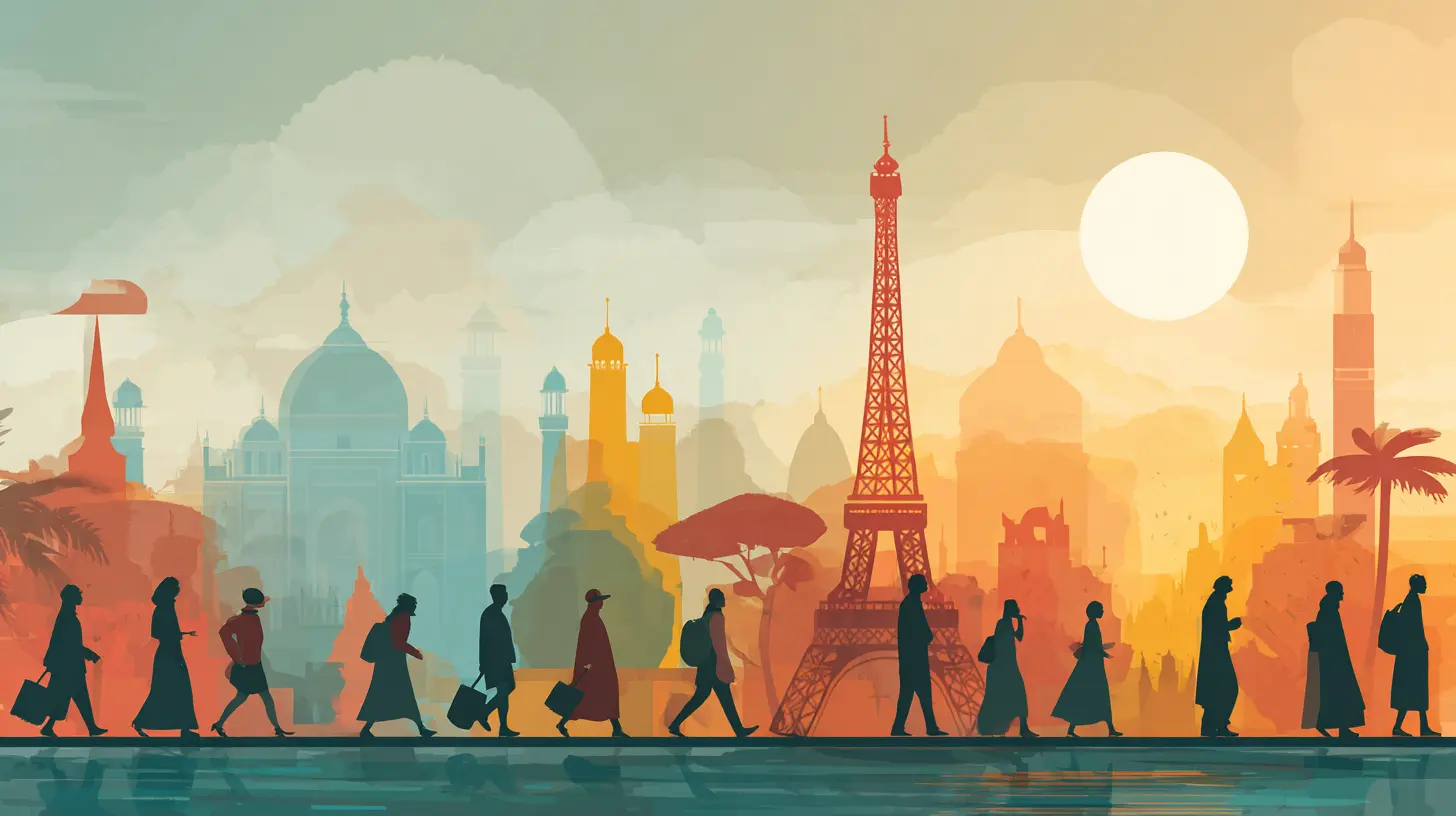
The Time Warp: Punctuality Isn’t Universal
You know how in your home country, being five minutes late feels like a crime? Maybe you’re from Germany, where being late is a personal insult, or from Japan, where arriving early is a sign of respect. Now, imagine landing in a country where “meeting at 10 AM” means “show up whenever the universe aligns.” By 2026, this time dichotomy will still be alive and kicking.In places like Brazil, Spain, or Nigeria, time is more of a suggestion than a rule. I once worked with a team in Colombia where a 9 AM start meant everyone shuffled in by 9:45, clutching coffee and laughing at my panicked face. “Relax,” they said. “The meeting will start when we’re all here.” And you know what? They were right. The work got done, but with more jokes and less stress. Meanwhile, in Switzerland, if you’re 30 seconds late, you might find the door locked and your boss frowning through the window.
Here’s the trick: By 2026, you’ll need to adapt your internal clock. If you’re a punctuality freak working in a “flexible time” culture, you’ll either go gray from anxiety or learn to breathe. Conversely, if you’re a chill latecomer in a hyper-punctual society, you’ll need to set three alarms and buy a watch that screams at you. The best advice? Ask locals: “Is this a ‘sharp start’ or a ‘soft start’?” It’s like asking if the salsa is spicy—you need to know before you bite.
The Meeting Maze: “Yes” Doesn’t Always Mean Yes
Here’s a fun one: you’re in a meeting in Japan, and everyone nods, says “hai” (yes), and smiles. You think, “Great, they agree with my brilliant idea!” Then, nothing happens. No action. No follow-up. What gives? Welcome to the world of indirect communication, where “yes” often means “I hear you, but I’m too polite to say no.”By 2026, you’ll encounter this in many Asian, Middle Eastern, and Latin American cultures. In South Korea, for example, saying “no” directly can feel rude, so people use phrases like “that might be difficult” or “we’ll consider it.” Meanwhile, in the Netherlands or Israel, you’ll get a blunt “no” that might feel like a slap. I remember working with a Dutch colleague who told me, “Your idea is terrible, but let’s fix it.” I was offended for three seconds, then realized she was just being honest.
Rhetorical question time: Have you ever tried to read between the lines in a culture where “maybe” means “absolutely not”? It’s like trying to decode a secret language written in eyebrow raises and slight head tilts. The key is to watch for non-verbal cues. A smile in Thailand often covers embarrassment, not agreement. A pause in Finland means “I’m thinking,” not “I’m ignoring you.” By 2026, you’ll need to become a cultural detective—or just ask clarifying questions like, “Just to confirm, does this mean we’re moving forward?” It’s awkward, but less awkward than a wasted month.
The Lunch Break Culture War
In your home country, lunch might be a sad desk sandwich eaten while answering emails. But in many parts of the world, lunch is a sacred ritual. By 2026, you’ll find yourself in countries where the midday break is a two-hour feast, complete with a nap. Yes, the siesta is real in Spain, and in Italy, lunch is a non-negotiable pause for pasta and conversation. Meanwhile, in the United States or Singapore, you’ll be judged for taking more than 20 minutes.I once worked in Mexico, where my team would disappear from 1 PM to 3 PM. I’d sit alone, hungry and confused, until a kind coworker explained: “We eat together. It’s not optional.” So I joined them, and suddenly, I understood why productivity actually increased after a proper meal and a chat. The contrast is stark: in Japan, you might eat a bento box at your desk in silence, while in France, eating at your desk is considered barbaric.
Metaphor alert: Working abroad is like being a guest at a potluck where everyone brings a different dish. You can’t just eat your own food and complain. You have to try the local cuisine—even if it’s a three-hour lunch. By 2026, remote work will blur these lines, but if you’re in an office, respect the lunch culture. Bring a book, take a walk, or just sit and stare at the wall. You’ll be happier, and your digestion will thank you.

The Hierarchy Hurdle: Who’s the Boss?
Ever worked in a flat structure where you can email the CEO directly? Now, try that in South Korea or Malaysia, where hierarchy is a serious business. By 2026, you’ll encounter workplaces where age, job title, and tenure dictate who speaks first, who pours the tea, and who gets the last word. In Japan, there’s a whole system of honorifics (san, sama, kun) that determine how you address someone. Mess it up, and you’ll get polite but icy stares.I once had a meeting in Thailand where I, the youngest and most junior person, accidentally gave a suggestion before my boss did. The room went silent. Later, a coworker pulled me aside and said, “You need to let the senior person speak first. It’s about respect.” I felt like a toddler who’d just colored on the walls. Meanwhile, in Sweden or Australia, calling your boss by their first name is standard, and challenging their ideas is encouraged.
The reality check: By 2026, you’ll need to study the pecking order like it’s a board game. In some cultures, the boss is like a parent—you defer, you don’t argue. In others, the boss is a teammate. The safest move? Observe. Watch who enters the room first, who sits where, and who interrupts whom. It’s like learning the dance steps before you hit the floor. If you’re unsure, err on the side of formality. You can always loosen up later, but you can’t un-insult someone.
The Personal Space Paradox
Here’s a weird one: in some countries, standing close to someone is normal; in others, it’s a threat. By 2026, you’ll find yourself in situations where a coworker stands inches from your face during a conversation (looking at you, Latin America and the Middle East), while in Northern Europe or Canada, you’ll need an arm’s length of buffer zone.I remember working in India, where personal space is more of a suggestion. People stand close, touch your arm when talking, and sit next to you even if there are empty chairs. At first, I felt like a cat being petted against its will. But then I realized it’s a sign of warmth and engagement. Meanwhile, in Finland, people stand so far apart that you need binoculars to see their expressions. It’s not rudeness—it’s respect for boundaries.
Analogy time: Think of personal space as a cultural thermostat. Some cultures keep it hot and cozy; others keep it cool and spacious. By 2026, you’ll need to adjust your own thermostat. If you’re a hugger in a handshake culture, you’ll get awkward looks. If you’re a handshake person in a hug culture, you’ll seem cold. The solution? Mirror the locals. If they lean in, lean in. If they step back, don’t chase them. And for heaven’s sake, don’t panic if someone invades your bubble—just breathe and remember it’s not a personal attack.
The Email Etiquette Enigma
Email is the universal language of work, right? Wrong. By 2026, you’ll discover that email etiquette varies wildly. In Germany, emails are direct, formal, and to the point. “Dear Mr. Schmidt, attached is the report. Best regards.” Done. In Japan, emails start with a seasonal greeting, an apology for any inconvenience, and a lengthy preamble before the actual content. I once received an email from a Japanese colleague that was three paragraphs of pleasantries before a single sentence of substance.Meanwhile, in Brazil or Italy, emails might be casual, full of emojis, and sent at 11 PM without apology. And in the UAE, a response might take days because “inshallah” (God willing) is the default timeline. The chaos is real. You’ll also encounter the “reply all” nightmare—in some cultures, it’s standard to CC everyone, while in others, it’s a firing offense.
Pro tip: Before you send that first email, ask a local coworker for a template. It’s like asking for the local menu translation—it saves you from ordering something embarrassing. And remember: in 2026, with AI tools helping with translation, you still can’t automate cultural nuance. A friendly emoji in one culture is professional in another. A formal sign-off in one culture is cold in another. You’ll mess up. Apologize, laugh, and move on.
The “Work-Life Balance” Illusion
Let’s talk about the big one: what does “work” even mean? By 2026, you’ll see that some cultures live to work, while others work to live. In South Korea or Japan, the workday doesn’t end until your boss leaves—or until you’ve had enough drinks with colleagues. Overtime is expected, and taking all your vacation days is seen as lazy. Meanwhile, in France or Denmark, leaving at 5 PM sharp is normal, and taking a full month of vacation is a right, not a request.I once worked in a startup in Berlin where people left at 4 PM to pick up their kids. In a similar role in Tokyo, I stayed until 9 PM and felt guilty for leaving “early.” The contrast is dizzying. By 2026, with remote work blurring lines, you’ll need to set your own boundaries. But if you’re in a local office, you’ll feel the pressure. In Mexico, work is social—you stay late because you’re having fun. In the UK, work is work—you leave when it’s done, but “done” is a moving target.
The honest truth: You can’t change a culture’s work ethic overnight. If you’re in a “workaholic” culture, you’ll either adapt or burn out. If you’re in a “slow living” culture, you’ll either relax or go stir-crazy. The key is to find your tribe. Seek out coworkers who share your rhythm. And remember: no one on their deathbed ever said, “I wish I’d answered more emails.”
The Gift-Giving Minefield
By 2026, you might find yourself invited to a coworker’s wedding, a baby shower, or a random celebration. And then comes the question: what gift do you bring? In China, giving a clock is a death wish (it symbolizes the end of life). In India, leather gifts might offend Hindus. In many cultures, gifts are opened in private to avoid showing envy or disappointment. In others, you rip it open in front of everyone and ooh and aah.I once brought a bottle of wine to a dinner in Saudi Arabia, only to realize alcohol is illegal. Oops. Another time, I gave a white flower bouquet in Japan, which is associated with funerals. The host smiled politely, but I could feel the awkwardness radiating. By 2026, you’ll need a crash course in gift etiquette. When in doubt, go with something neutral: chocolates (check for dietary restrictions), a small local souvenir, or a heartfelt card. And always, always ask a local: “Is this okay?” It’s better to look clueless than to offend.
The Bathroom Break Bafflement
Yes, even bathroom breaks have cultural rules. In some countries, you’ll need to bring your own toilet paper. In others, you’ll face a squat toilet and wonder if you’re doing yoga or biology. By 2026, you’ll also encounter the “coffee break” culture, where bathroom breaks are tied to social rituals. In Italy, you don’t just use the restroom—you stop for a quick espresso and a chat first. In Japan, you might find high-tech toilets that play music and wash your nether regions, leaving you confused and slightly intimidated.The real kicker: In some cultures, taking too many bathroom breaks is seen as lazy. In others, it’s a sign of poor health. I once worked in a place where a coworker timed my breaks and made a comment. I wanted to say, “It’s called hydration, Karen.” But I smiled and drank less water. The lesson? Be discreet. And if you’re in a country where you need to pay for public restrooms, always carry coins. It’s a small thing, but it’s the small things that trip you up.
The Emotional Rollercoaster of Misunderstandings
Here’s the thing about cultural differences: they’ll make you feel like a toddler learning to walk. You’ll trip, fall, and sometimes cry. But you’ll also laugh until your stomach hurts. By 2026, you’ll have stories that will last a lifetime. The time you accidentally insulted someone’s mother by using the wrong hand gesture. The time you ate something you thought was chicken but was actually brain. The time you showed up to a meeting in shorts when everyone else was in suits.Rhetorical question: Isn’t that why you’re working abroad in the first place? For the adventure? For the discomfort that makes you grow? If you wanted everything to be easy, you’d stay home. So embrace the weirdness. When you mess up, apologize sincerely. When you’re confused, ask questions. When you’re frustrated, take a deep breath and remember that you’re a guest in someone else’s home.
By 2026, the world will be smaller, but the cultural gaps will still be wide enough to fall into. And that’s okay. Because every time you fall, you learn something new. You learn that “yes” doesn’t always mean yes, that lunch is a sacred ritual, and that personal space is a cultural bubble that can be popped. You learn that hierarchy isn’t about power—it’s about respect. And you learn that the best way to navigate a foreign workplace is with humility, humor, and a willingness to look foolish.
So, go ahead. Pack your bags. Set your alarms for the right time zone. And remember: by 2026, you won’t just be working abroad—you’ll be living a story that no one else can tell. Just don’t forget to bring your own toilet paper.
all images in this post were generated using AI tools
Category:
Working AbroadAuthor:

Pierre McKinney
Discussion
rate this article
1 comments
Macey McMaster
Fascinating to see how virtual reality and remote work may reshape—or reinforce—the cultural nuances we encounter abroad by 2026.
April 30, 2026 at 3:54 AM
Pierre McKinney
Absolutely, the intersection of virtual reality and remote work will definitely influence how we perceive and engage with different cultures. It will be interesting to see how this evolves.