The Traveler’s Guide to Global Wi-Fi Access in 2026
4 May 2026
Let's be honest for a second. If you are reading this, you have probably been there. You land in a new country. You are jet-lagged, your neck hurts from the plane, and your phone is a brick because you forgot to turn off roaming. The first thing your brain screams is not "Wow, the architecture!" It is "I need Wi-Fi, right now."
Connectivity has become the modern traveler's second passport. In 2026, the old game of hunting for a cafe with a signal or paying a small fortune for a hotel lobby code is mostly dead. But it is not completely gone. We have entered a weird middle zone where the technology is incredible, but the pricing and availability are still a mess of hidden fees and dead zones.
So, how do you actually stay online without selling a kidney? Let's break down the real state of global Wi-Fi in 2026, and more importantly, how you can stop fighting with your settings and start enjoying the trip.
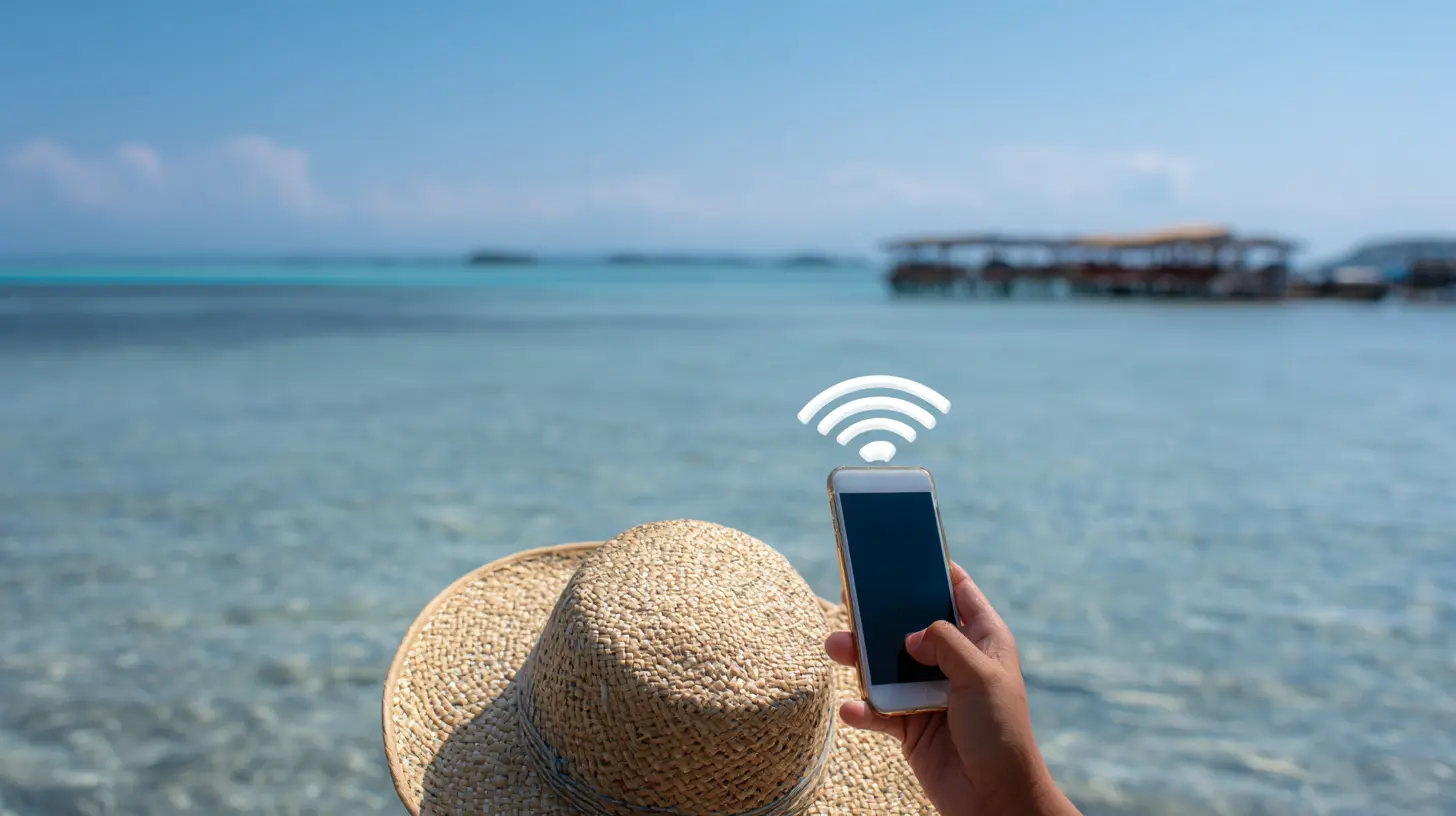
The 2026 Connectivity Landscape: It's Not What You Think
We have all seen the sci-fi movies where you just blink and you are online. Spoiler alert: we are not there yet. But we are closer than you might think.In 2026, the biggest shift is the death of the single solution. There is no magic SIM card or one app that works perfectly in Tokyo, rural Peru, and a cafe in Paris. The market has fractured. You have eSIMs that work like magic in cities, satellite messengers that keep you alive in the backcountry, and public Wi-Fi that is either your best friend or a hacker's playground.
Think of it like packing a suitcase. You wouldn't bring only a t-shirt to the Arctic, right? So why would you rely on one method to get online across the globe?
The eSIM Explosion
Remember when you had to find a tiny shop at the airport to buy a physical SIM card? That feels ancient now. In 2026, eSIMs are the default for anyone traveling to more than one country. The big players like Airalo, Holafly, and local carriers have made it stupidly simple. You buy a plan on your phone before you leave, scan a QR code, and boom-you have data when you land.
But here is the catch nobody tells you. eSIMs are fantastic for data, but they usually suck for voice calls. You can send a million WhatsApp messages, but calling a local taxi company or a hostel to confirm your booking? That can be a nightmare. You often need a separate VoIP app like Skype or Google Voice, which then chews through your precious data.
Also, not all eSIMs are created equal. Some use secondary networks that are slower than a snail on a treadmill. If you are in a crowded city like Bangkok or Barcelona, your "unlimited" plan might get throttled to 2G speeds after you watch one TikTok video. Always check the fine print for "fair usage policies." They are the hidden potholes on the information superhighway.
The Satellite Revolution (Finally)
This is the real game-changer for 2026. For years, staying connected meant staying near civilization. If you were hiking in Patagonia or sailing in the Aegean, you were dark. Not anymore.
Apple's satellite SOS feature from a few years back was the appetizer. Now, the main course is here. Companies like Starlink (SpaceX) and AST SpaceMobile are pushing direct-to-cell satellite service. The idea is simple: your regular phone talks to a satellite directly, no extra dish needed. In 2026, this is rolling out in patches. You can send a text message from a mountain in Nepal or make a low-quality voice call from a desert in Morocco.
But do not throw away your satellite messenger just yet. This tech is still in its toddler phase. It works best in open skies. If you are in a dense forest or a narrow canyon, it fails. And the data speeds are roughly equivalent to dial-up. So, you can let your mom know you are alive, but you are not streaming Netflix on a glacier.
The Hidden Costs of "Free" Wi-Fi
We all love the word "free." But in the world of travel connectivity, free often costs you more than money.Public Wi-Fi in 2026 is still a minefield. Airports, coffee shops, and hotel lobbies offer convenience, but they are also the favorite hunting grounds for cybercriminals. The latest trick is not just stealing your credit card. It is session hijacking. A bad actor can grab your login token from an unsecured network and pretend to be you on Facebook or even your bank.
I am not saying you should never use public Wi-Fi. I am saying you need to treat it like a public bathroom. Use it quickly, do not touch anything important, and wash your hands (or in this case, use a VPN).
Why a VPN Is No Longer Optional
If you are reading this in 2026 and you do not have a VPN on your phone and laptop, stop. Go get one. Seriously.
A VPN (Virtual Private Network) encrypts your data so that even if you are on a dodgy network, nobody can read your messages or steal your passwords. It also solves the annoying problem of geo-restrictions. Want to watch your favorite show from home while sitting in a hostel in Vietnam? A VPN makes it look like you are still in your living room.
But here is the nuance I rarely see discussed: not all VPNs are fast. Some are so slow they make your connection unusable. For travel, you need one that has servers in the country you are visiting. If you are in Japan and your VPN routes you through Australia, your latency will be terrible. Look for a VPN with a "kill switch" feature. If the VPN drops, the kill switch cuts your internet entirely so you are never exposed. That is a lifesaver.

The Tech You Actually Need to Pack
Let's get practical. You cannot just buy a plan and hope for the best. You need the right gear.The Portable Router (The MVP)
In 2026, the humble portable Wi-Fi router (often called a MiFi or hotspot) has made a comeback, but it is smarter now. The new models support multiple eSIM profiles. You can switch between carriers on the fly without swapping SIM cards. The best part? They have better antennas than your phone. If you are in a hotel with weak signal, the router can often pull in a bar where your phone cannot.
I carry a device called a GlocalMe or a similar unit. It lets me buy data by the gigabyte, and it acts as a battery bank for my phone. It is one less thing to charge. The downside is that it is another device to carry and keep charged. But for a long trip or a family traveling together, it beats buying five separate eSIMs.
The USB-C Dongle of Doom
Do not forget that many hotels, especially in budget-friendly areas, still have Ethernet jacks in the wall. In 2026, carrying a tiny USB-C to Ethernet adapter is a cheat code. Plug it into your phone or laptop, and you get a wired connection that is faster and more secure than any Wi-Fi. It looks ugly, but it works when everything else fails.
The Battery Bank (Your Lifeline)
This is obvious, but I will say it anyway. Searching for Wi-Fi drains your battery faster than anything. A 20,000mAh power bank is not optional. It is essential. Get one that supports fast charging (PD or Quick Charge) and has two ports. You do not want to be the person crouching next to a wall outlet in an airport terminal.
Regional Realities: Where You Will Struggle (and Where You Won't)
Connectivity is not equal. Let's get specific.Southeast Asia: The Goldilocks Zone
Thailand, Vietnam, and Indonesia are a traveler's dream for Wi-Fi. You can get a local SIM for five dollars with 30GB of data. The speeds in cities are often faster than what you get at home. The catch? Rural islands and mountain villages. In the Thai islands, the signal can vanish as soon as you leave the main beach. In 2026, some of these spots have finally gotten fiber, but it is still spotty. Always download offline maps for these areas.
Europe: The Fragmented Mess
Europe has great infrastructure, but the pricing is a headache. Thanks to "Roam Like at Home" rules, an EU SIM works across most of Europe. But if you are from outside the EU, buying a local SIM in one country and then traveling to another can trigger roaming fees again. The best workaround is a regional eSIM that covers the Schengen area. Also, avoid "free" Wi-Fi in major train stations. They are often slow and crowded. Use your own data.
Africa: The Frontier
Africa is where 2026 is most exciting. Mobile money and internet access have leapfrogged traditional banking. In cities like Nairobi, Lagos, and Cape Town, the 4G and 5G coverage is excellent. But the further you go, the more you rely on local carriers like MTN or Safaricom. Satellite is your best bet for safaris or remote treks. Do not expect to stream anything in the bush. But you can usually send a WhatsApp text or an email.
Japan and South Korea: The Speed Demons
These countries have the fastest internet on Earth. But their Wi-Fi networks are weirdly fragmented. You often need separate passwords for every floor of a hotel. The good news is that pocket Wi-Fi rentals are cheap and reliable at the airport. The bad news is that English-language support for tech issues is rare. Download the apps in advance.
The Psychology of Being Offline
Here is the part nobody talks about. In 2026, we are addicted to the blue light. We panic when the signal drops. But sometimes, the best travel experience happens when you have no signal.I am not saying you should go completely dark. But I am saying you should plan for intentional disconnection. Pick one day on your trip where you put your phone in airplane mode. Just for a few hours. Wander without a map. Talk to a stranger. Get lost.
The irony is that in trying to stay connected everywhere, we disconnect from the place we are actually in. The best photos are the ones you remember, not the ones you post. The best conversations happen when you are not checking your notifications.
The Checklist for 2026
Before you leave on your next trip, run through this mental checklist:
1. Research the local carriers. Do not just buy the first eSIM you see. Check Reddit or travel forums for the best network in the specific region you are visiting.
2. Install a VPN. Set it up and test it before you leave. Make sure the kill switch is on.
3. Download offline maps. Google Maps and Maps.me let you download entire countries. Do it.
4. Back up your eSIM profile. Take a screenshot of the QR code and email it to yourself. If you lose your phone, you can reinstall it on a new one.
5. Bring a backup. A physical SIM adapter, a portable router, or even just a list of local hotspots. Do not put all your eggs in one digital basket.
The Future is Already Here
In 2026, the dream of being always-on is almost a reality. You can text from a mountain, video call from a boat, and work from a beach. But the dream comes with a price tag, a learning curve, and a few security risks.The real skill is not just getting online. It is knowing when to get off. The world is smaller than ever, but it is also louder. The best traveler in 2026 is not the one with the fastest connection. It is the one who uses that connection to enrich the experience, not escape it.
So, go ahead. Buy the eSIM. Pack the battery bank. Get the VPN. But also remember to look up from the screen. The Wi-Fi will be there when you get back. The moment in front of you will not.
all images in this post were generated using AI tools
Category:
International Travel TipsAuthor:

Pierre McKinney
Discussion
rate this article
1 comments
Scout Sanchez
Exploring the world in 2026 will be easier than ever with seamless Wi-Fi access. Stay connected while discovering new cultures, foods, and landscapes. Adventure awaits, so pack your bags and get ready to make unforgettable memories!
May 5, 2026 at 3:49 PM
Pierre McKinney
Absolutely! With improved Wi-Fi access, travelers can share their experiences in real time and stay connected wherever their adventures take them. Exciting times ahead!